
Litecoin Explained: The Silver to Bitcoin’s Gold
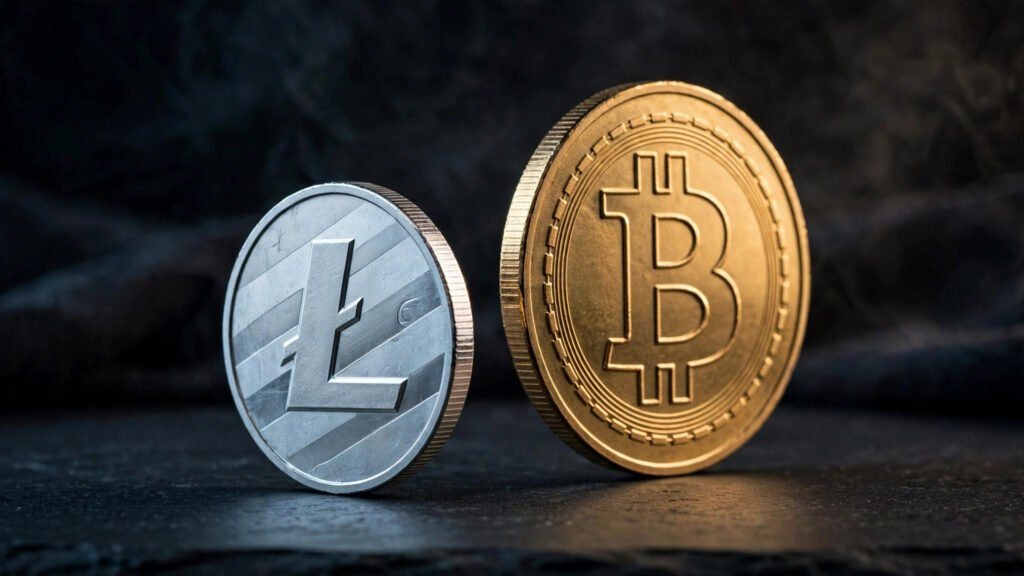
If Bitcoin is often described as digital gold, then Litecoin has long been described as digital silver. The comparison is not just a catchy nickname. It captures how Litecoin was designed: to be a lighter, faster, and more everyday companion to Bitcoin, built on similar ideas but tuned for different uses. For newcomers, Litecoin is one of the clearest ways to understand how cryptocurrencies can share a family resemblance while still being distinct projects.
What Is Litecoin?
Litecoin is a peer-to-peer cryptocurrency that was launched in 2011 by Charlie Lee, a former Google engineer. It was created as an open-source project based on Bitcoin’s code, with a few important changes. Like Bitcoin, Litecoin runs on a decentralised network of computers, uses a public ledger called a blockchain, and allows people to send value directly to one another without going through a bank.
What makes Litecoin interesting for learners is its age and staying power. Many cryptocurrencies launched in the early 2010s have faded away, but Litecoin has continued to operate, be traded, and be maintained for well over a decade. That longevity does not make it better or safer than any other asset, but it does make it a useful case study in how a blockchain network can keep running over time.
Why the Silver Comparison?
The silver-to-gold comparison works on several levels. Gold is often treated as a store of value: scarce, durable, and held for the long term. Silver, by contrast, has historically been more plentiful and more commonly used for everyday transactions and smaller payments. Litecoin follows a similar pattern. Its total supply is capped at 84 million coins, exactly four times Bitcoin’s cap of 21 million, so it is scarcer than many newer coins but more plentiful than Bitcoin itself.
The comparison also reflects speed. Litecoin produces a new block roughly every two and a half minutes, compared with about ten minutes for Bitcoin. In practice, that means transactions can be confirmed more quickly on the Litecoin network. For someone learning about blockchains, this is a helpful illustration of a basic trade-off: changing a single setting, such as block time, can change how a network feels to use, even when the underlying idea stays the same.
How Litecoin Differs From Bitcoin
Beyond block time and supply, Litecoin originally used a different mining algorithm, called Scrypt, rather than Bitcoin’s SHA-256. The goal was to make mining accessible to more people using ordinary computer hardware, although specialist mining machines later became common for Litecoin too. Over the years, Litecoin has also adopted upgrades such as SegWit, which helps transactions fit more efficiently into blocks, and it has experimented with privacy features through an optional extension called MimbleWimble.
It is worth noting what Litecoin is not. It is not a smart-contract platform like Ethereum, and it is not designed to host a large ecosystem of decentralised applications. Its purpose is narrower and simpler: to move value from one person to another on a reliable, decentralised network. That simplicity is part of its appeal for beginners, because there are fewer moving parts to understand.
What Is Litecoin Used For?
In practice, Litecoin is mainly used for payments and transfers, and as a way for people to learn about cryptocurrency without dealing with the complexity of newer platforms. Some merchants accept it, some people use it to move funds between exchanges because of its relatively fast confirmations, and others simply hold a small amount while they learn how wallets, addresses, and transactions work.
Because Litecoin is widely supported by wallets and exchanges, it is often one of the first altcoins a beginner encounters. That does not mean it is suitable for everyone, and it certainly does not mean its price will rise. Like all cryptocurrencies, its value can move sharply, and past performance tells us nothing reliable about the future.
Risks and Things to Keep in Mind
Every cryptocurrency carries risk, and Litecoin is no exception. Its price is volatile, its future development depends on a community of volunteers and contributors, and it faces competition from faster payment networks, stablecoins, and newer blockchains. Regulatory treatment also varies by country and can change over time, which may affect how Litecoin can be bought, sold, or used.
Security matters too. Owning Litecoin means looking after private keys or choosing a wallet provider carefully, understanding the difference between keeping coins on an exchange and holding them in your own wallet, and being wary of scams that promise guaranteed returns. No legitimate project can promise profits, and anyone who does so should be treated with scepticism.
Conclusion
Litecoin earned its nickname for a reason. It took Bitcoin’s core idea, made it a little faster and a little more plentiful, and kept it running for more than a decade. For learners, it is a clear example of how small design choices can create a distinct cryptocurrency, and how a project can find a role alongside, rather than instead of, Bitcoin. Whether you ever use Litecoin yourself, understanding it gives you a firmer grasp of the wider cryptocurrency landscape — and that understanding is worth more than any single coin.