
Chainlink Explained: Bringing Real-World Data to Blockchains
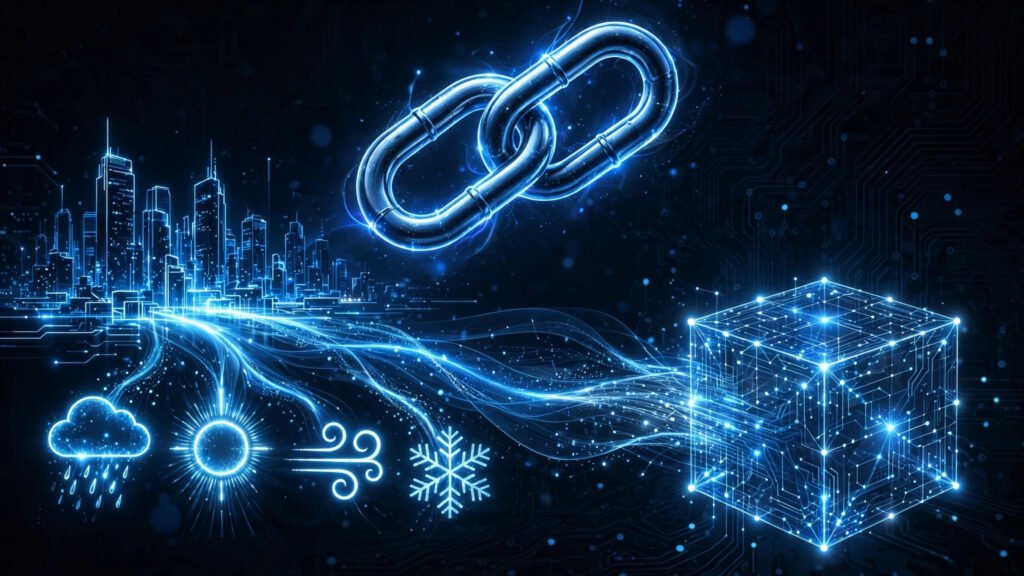
Blockchains are powerful because they can run programs and move value without a central authority, but they have one important limitation: on their own, they cannot see the outside world. A smart contract cannot check the price of a stock, the result of a sports match, or the weather in a city unless someone supplies that information. Chainlink was built to solve that problem by connecting blockchains to real-world data in a way that is meant to be reliable, transparent, and difficult to manipulate.
The Problem Chainlink Solves
Smart contracts are agreements written in code that execute automatically when certain conditions are met. For example, a contract might release a payment when a shipment arrives, or settle an insurance claim when a flight is delayed. The challenge is that the blockchain itself only knows what happens on the blockchain. It has no built-in way to verify events in the physical world or on other computer systems.
This gap is often called the oracle problem. An oracle is a service that brings outside information onto a blockchain. If that service is controlled by a single company or a single server, it becomes a weak point. A mistake, an outage, or dishonest reporting could cause the contract to act on wrong information, even if the blockchain itself is secure. Chainlink aims to reduce that risk by using a network of many independent data providers rather than a single source.
How Chainlink Oracles Work
In simple terms, a Chainlink oracle network works like a group of independent reporters who are asked the same question. When a smart contract needs data, such as the current price of an asset, it sends a request to the network. Multiple oracle nodes then fetch the answer from different sources, such as exchanges or data providers, and deliver their results to the blockchain.
The network compares these answers and combines them, often by taking a median value, so that one faulty or dishonest report is less likely to determine the outcome. Node operators are also given economic incentives to behave honestly. They may need to stake LINK, the network’s native token, as a kind of deposit, and they can earn fees for providing accurate data. Poor performance can damage their reputation and reduce future work.
What Is LINK Used For?
LINK is the token at the center of this system. Developers and users pay node operators in LINK for data services, and operators may stake LINK as collateral for the work they perform. This design links the security of the service to the token: participants who want to earn fees must put something at risk, which discourages careless or malicious behavior.
It is important to distinguish LINK from the data itself. Holding LINK does not give someone control over Chainlink’s data feeds, and the token’s price is not a measure of how accurate any particular feed is. LINK is best understood as the payment and incentive layer that helps coordinate a large group of independent operators.
Where Chainlink Is Used
Price feeds are the most widely known use case. Decentralized finance applications, such as lending platforms and decentralized exchanges, need up-to-date prices to calculate collateral, set interest, and settle trades. A reliable price feed helps these applications function without relying on a single exchange or administrator.
Chainlink’s technology has also been used for other kinds of data, including verifiable randomness for games and lotteries, proof that reserves back a token, and connections between different blockchains. In each case, the underlying idea is the same: a smart contract needs a trustworthy input from outside its own network, and a decentralized group of nodes supplies it.
Risks and Limitations
Decentralization reduces risk, but it does not eliminate it. Oracle networks still depend on the quality of their underlying data sources. If several sources report the same wrong price during an unusual market event, the combined result can still be wrong. Technical failures, network congestion, and delays can also affect how quickly data reaches a contract.
There is also a governance and design question. Choosing which sources to trust, how many nodes to include, and how to handle disputes all require careful decisions. Users of a decentralized application should therefore look beyond the label and ask how its data feeds are built, how often they update, and what happens if a feed fails.
Conclusion
Chainlink addresses a fundamental gap in blockchain design: blockchains are closed systems, but many useful applications need information from the outside world. By using networks of independent node operators, economic incentives, and aggregated answers, Chainlink provides a way to bring that information on-chain without handing control to a single provider. Understanding how oracles work helps explain why data quality, decentralization, and incentives matter just as much as the smart contracts that use the data.